
Choosing a career course is a big decision. Whether you’re a student, a working professional, or someone planning a career switch, you want one thing a good job after completing the course.
While searching for a digital marketing course, you may come across institutes like Kraftshala that talk about Placement Guarantee, Placement Assistance, and Placement Commitment.

At first, they may sound the same.
But they are not.
Understanding the difference can help you avoid false promises and choose a course that genuinely supports your career goals.
In this guide, we’ll explain everything in simple language so you know exactly what to look for before enrolling.
Contents
- 1 Why Understanding Placement Guarantee Matters
- 2 What is Placement Guarantee?
- 3 What is Placement Assistance?
- 4 What is Placement Commitment?
- 5 Placement Guarantee vs Placement Assistance
- 6 Which One is Better?
- 7 Questions You Should Ask Before Joining Any Digital Marketing Course
- 8 Red Flags to Watch Out For
- 9 Why Practical Learning Matters
- 10 Skills Employers Actually Look For
- 11 Checklist Before You Enroll
- 12 Ready to Explore a Career in Digital Marketing?
- 13 Frequently Asked Questions
- 13.1 1. What is Placement Guarantee?
- 13.2 2. Is Placement Guarantee the same as Placement Assistance?
- 13.3 3. Which is better: Placement Guarantee or Placement Assistance?
- 13.4 4. Do all students qualify for Placement Guarantee?
- 13.5 5. Does Placement Assistance guarantee a job?
- 13.6 6. Why should I read the placement policy?
- 13.7 7. What skills should a digital marketing course teach?
- 13.8 8. Are live projects important?
- 13.9 9. What should I ask before joining a course?
- 13.10 10. How can I improve my chances of getting hired?
Quick Answer
A Placement Guarantee promises that eligible students will receive a job offer after meeting the institute’s requirements. Placement Assistance means the institute helps students prepare for interviews and connects them with hiring companies, but it does not guarantee a job. Placement Commitment usually refers to a structured hiring process with defined eligibility criteria and employer connections.
Why Understanding Placement Guarantee Matters
The digital marketing industry is growing rapidly.
As more institutes enter the market, many use attractive words like:
- 100% Placement Guarantee
- Assured Placements
- Guaranteed Job
- Placement Support
- Placement Commitment
These phrases sound similar, but they don’t always mean the same thing. If you don’t understand the difference, you could choose the wrong course and have unrealistic expectations. That’s why learning about Placement Guarantee is important before investing your time and money.
What is Placement Guarantee?
A Placement Guarantee means the institute promises eligible students access to a job opportunity after successfully completing the course and fulfilling predefined requirements.
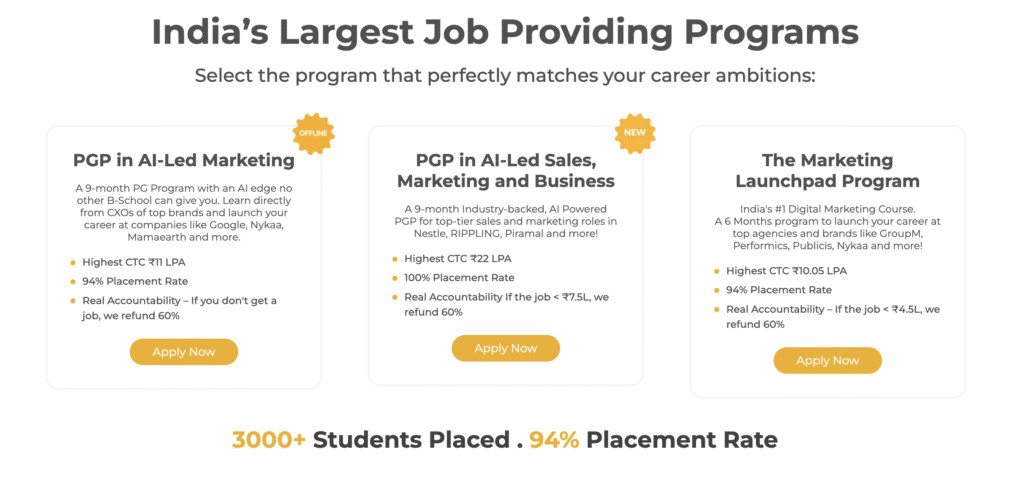
One example is Kraftshala. The institute publicly shares its placement process, eligibility criteria, and career support on its website. It also highlights a 94% placement rate, over 3,000 students placed in digital marketing roles, and a “Real Accountability” policy where eligible students may receive a 60% fee refund if they don’t secure a job above ₹4.5 LPA, subject to the program’s terms. This kind of transparency makes it easier for students to make informed decisions. No matter which institute you’re considering, always review the official placement policy before enrolling.
Those requirements may include:
- Completing all assignments
- Maintaining attendance
- Passing assessments
- Building a portfolio
- Participating in mock interviews
- Following placement guidelines
The exact terms differ between institutes, so always read the official placement policy carefully.
A genuine placement guarantee is usually backed by a structured hiring process rather than a marketing slogan. If you’re researching digital marketing careers and industry-ready skills, learning from professionals with real-world experience can make a big difference.
What is Placement Assistance?
Placement Assistance means the institute supports you during your job search.
This support may include:
- Resume building
- LinkedIn profile optimization
- Mock interviews
- Career guidance
- Portfolio reviews
- Interview preparation
- Job referrals
- Company introductions
However, placement assistance does not guarantee that you will receive a job offer. Your final selection still depends on your skills, interview performance, and the hiring company’s decision.
What is Placement Commitment?
Some institutes use the term Placement Commitment.
Generally, it means the institute is committed to helping eligible students access hiring opportunities through employer partnerships and structured placement support.
The exact meaning varies by institute, so it’s important to review the official placement policy before enrolling.
Placement Guarantee vs Placement Assistance
| Feature | Placement Guarantee | Placement Assistance |
|---|---|---|
| Job support | Yes | Yes |
| Resume guidance | Yes | Yes |
| Interview preparation | Yes | Yes |
| Hiring company access | Yes | Usually Yes |
| Job offer promised | Depends on eligibility and institute policy | No |
| Student eligibility criteria | Usually required | Usually required |
Which One is Better?
There isn’t a universal answer.
It depends on the institute.
A strong Placement Assistance program with experienced mentors, practical projects, and employer connections may be more valuable than a weak placement guarantee with limited hiring opportunities.
Instead of focusing only on the words, evaluate the entire placement ecosystem.
Questions You Should Ask Before Joining Any Digital Marketing Course
Before enrolling, ask these questions:
1. What are the eligibility criteria?
Some institutes require:
- Assignment completion
- Attendance
- Minimum scores
- Portfolio submission
Know these requirements in advance.
2. Which companies hire students?
Ask for examples of companies that have recruited students in the past.
3. Is there interview preparation?
Good institutes conduct:
- Mock interviews
- HR rounds
- Technical interviews
- Communication training
4. Will I work on live projects?
Real projects help you build confidence and improve your portfolio.
5. Who teaches the course?
Learn from mentors who have practical industry experience.
6. Does the curriculum match industry requirements?
A modern digital marketing course should include topics such as:
- Google Ads
- Meta Ads
- SEO
- Content Marketing
- Analytics
- Performance Marketing
- Ecommerce Marketing
- AI tools
Red Flags to Watch Out For
Be cautious if an institute:
- Promises jobs without explaining eligibility
- Doesn’t share placement policies
- Avoids questions about hiring partners
- Has no student portfolio examples
- Focuses only on marketing instead of learning
Always verify the details before making a decision.
Why Practical Learning Matters
Recruiters hire people who can solve problems.
That’s why practical learning is so important.
A good digital marketing course should include:
- Live project
- Case studies
- Campaign creation
- Budget planning
- Keyword research
- Analytics dashboards
- Portfolio building
The more practical experience you gain, the more confident you’ll feel during interviews.
Skills Employers Actually Look For
Today’s employers don’t just look for certificates.
They look for candidates who can:
- Build campaigns
- Analyze data
- Solve business problems
- Communicate ideas
- Learn quickly
- Work with AI tools
- Understand customer behavior
These skills increase your chances of getting hired.
Checklist Before You Enroll
Usethis checklist before joining any course.
- Read the placement policy.
- Understand the eligibility criteria.
- Review the curriculum.
- Check mentor experience.
- Look at student portfolios.
- Read genuine reviews.
- Understand the fee structure.
- Ask about placement support.
- Check hiring partners.
- Speak to alumni if possible.
Final Thoughts
Choosing a course is an investment in your future.
Don’t choose based only on advertisements.
Instead, compare:
- Curriculum
- Mentors
- Practical learning
- Live projects
- Placement support
- Alumni outcomes
- Industry relevance
Whether an institute offers a Placement Guarantee, Placement Assistance, or Placement Commitment, the most important factor is how well it prepares you for the job market.
The right course will help you build skills, confidence, and a strong portfolio that employers value.
Ready to Explore a Career in Digital Marketing?
If you’re researching digital marketing courses and want to learn more about a program that offers structured learning and career support, you can explore it here:
👉 India’s Largest Job Providing Programs
Take your time, compare your options, and choose the program that aligns with your career goals.
Frequently Asked Questions
1. What is Placement Guarantee?
Placement Guarantee is a commitment by an institute to provide eligible students access to job opportunities after meeting specified requirements.
2. Is Placement Guarantee the same as Placement Assistance?
No. Placement Assistance provides career support, while Placement Guarantee refers to a specific placement commitment subject to eligibility and institute policy.
3. Which is better: Placement Guarantee or Placement Assistance?
It depends on the quality of the course, mentors, employer network, and placement process rather than the label alone.
4. Do all students qualify for Placement Guarantee?
Not always. Most institutes have eligibility requirements such as completing assignments, maintaining attendance, or passing assessments.
5. Does Placement Assistance guarantee a job?
No. It provides support during the hiring process but does not guarantee employment.
6. Why should I read the placement policy?
It explains eligibility criteria, placement process, and the institute’s commitments.
7. What skills should a digital marketing course teach?
Google Ads, Meta Ads, SEO, analytics, content marketing, AI tools, ecommerce marketing, and campaign management.
8. Are live projects important?
Yes. They help you build practical skills and create a stronger portfolio.
9. What should I ask before joining a course?
Ask about curriculum, mentors, projects, placement process, hiring partners, and alumni outcomes.
10. How can I improve my chances of getting hired?
Focus on learning practical skills, building a portfolio, preparing for interviews, and continuously improving your knowledge.